Showing posts with label Chinese. Show all posts

Monday, April 15, 2013

Pork Satay @Sun May Hiong Satay House, Malacca


Whenever I happen to be in Malacca, I make it a point to have the pork satay at Sun May Hiong Satay House. It's something I grew up having only in Malacca, during our visits to the grandparents and so the city and this pork satay are inextricably linked in my mind. For non-Malaysians, satay is a traditionally Malay dish, most Malays are Muslim and abstain from pork, so pork satay is rarely found outside Malacca. Therefore, even though this satay house (calling it a restaurant feels like a bit of a stretch) moved to different locations around the city throughout the years, we faithfully tracked them down to sate our appetites for this delicious local treat. Without a doubt, it is my favourite type of satay and sauce. 

I was told throughout my childhood that the satay sauce at Sun May's is made with 'belimbing', giving it a bright, sourish, tanginess that sets it apart from the traditional sweet peanut satay sauces. Unfortunately, I cannot tell you whether this refers to starfruit (which is 'belimbing' in Malay) or its cousin the Averrhoa bilimbi. Whenever I referred to it as starfruit, as a child, I was corrected by my parents who insisted that the 'belimbing' in the sauce was not the plain ol' starfruit I was used to. My search on Google yielded the Averrhoa bilimbi as the closest possible alternative but I have never seen the sauce being made, so I have never been able to verify this.  


The combination of a coat of this delicious, tangy sauce on the properly charred, tasty, salty pieces of skewered pork is bliss, even in the blistering tropical heat that usually accompanies our trips to Malacca. The best part about this type of dining is that you don't have to order your food. As soon as you sit down, you are automatically given little pots of the satay sauce, ketupat (cubed, packed rice), cucumber and onion slices (that are all best enjoyed slathered in the sauce) and then various types of satay (pork, chicken, intestines, etc. - you can specify your preferences if you want), hot off the barbecue, are delivered to your table. We used to be able to devour 40 sticks each, but can now only manage 20 on a good day - ah, the appetites of teenagers. The only thing that isn't ideal (especially if you are hungry) is the occasional long wait between satay servings - but I suppose that is the price of getting them fresh off the coals, so you'd best allay your hunger and impatience with those cucumbers and ketupats.

Sun May Hiong Satay House
50/50A Jalan Kota Laksamana 1/1
Taman Kota Laksamana
75200 Melaka 
Malaysia
+606 281 7281

Monday, April 1, 2013

Hong Kong 2013 Part I: Chau Tau Foo and Other Adventures

Thanks to my aunt's generosity, I end up visiting Hong Kong again this year. The following are the events that transpired (and the food that was eaten):

On our first night, Aunt's friends (T & L) took us to Temple Street, where fortune tellers, random 'karaoke' singers and other assorted 'entrepreneurs' lined their tent stalls for the night's trade. I was most amused at the 'singers', who were simply standing by themselves, at the side of the road, singing (neither poorly nor well) over recorded music piping out of old fashioned stereos - is there really a living to be made of this or do they do it for their own pleasure? And apparently you can make song requests! I imagine that you would have to pay them something for that, but I can't imagine anyone paying to hear a bad cover of a song they (presumably) like, in a back-alley, among hawkers. It has been quite a while since I last entertained a notion that I found so equally baffling and entertaining.

After Aunt got her rather unimpressive palm reading, we ended up in Mongkok where I had my very first 'chau tau foo' (smelly tofu). Actually we (Pa, Bro and I) came across the same stall last year but had just consumed a rather large roast goose lunch, so I couldn't quite manage anything else at the time. We were ambling along when Pa stopped in his tracks, raised a finger in mid air, indicating to the atmosphere, and amusedly asked, "Aha! Can you smell that? Do you know what it is?". I took a whiff and smelt the odour of my beloved salted fish, but since we were in Hong Kong, I guessed that it was chau tau foo. I thought it smelt fantastic! Pa then, chortling, proclaimed that I was "a real Chinese" and the first person he knew who loved the smell of chau tau foo. The smell comes from the fermented brine that the tofu is marinated in, which apparently smells like garbage to most others. Quite the manifestation of 'one man's garbage...'

This time, the conditions were perfect - it was cool, close to midnight and there was a fantastic, more relaxed, market atmosphere with lots of people eating and walking around, unwinding after a long day's work (in contrast to the busy, restless, work day crowd Pa, Bro and I encountered during the lunch rush last year). T & L very kindly got us some chau tau foo, slathered with all the appropriate sauces, and initiated us on the intricacies of CTF appreciation. Aunt had to be convinced to simply try a bite, but not I. The skin was wonderfully crispy and savoury and all the lovely intense sauces (sorry, no idea what they were) that were smoky, spicy, sweet, salty and bean-y made it quite a delicious treat. Without the skin and the sauces (i.e. the insides), it tasted just like regular tofu.

We then moved on to Yuet Hing Yuen (33 Soy Street, Mongkok) where we had Vietnamese noodles with the most potent, intoxicating broth and ended the night at Lucky Dessert (25-27 Soy Street, Mongkok) with some pretty decent tong sui - I had my favourite 'pak gor yee mai' (gingko & barley), with a twist, i.e. the addition of 'tau foo fa' (soy bean curd).


When we got back to the hotel, I realised that my phone wasn't detecting Aunt's internet hotspot so I resigned myself to internet deprivation until Monday. The significance of this will be explained later.

To be continued...

Sunday, September 23, 2012

Yung Kee

We had spent the day walking around Harbour City Mall, surrounding Tsim Sha Tsui area and Mong Kok. I wanted a bag and a jacket but found nothing suitable. I must be the only person who went to Hong Kong and couldn't find anything to buy. After a long day of fruitless "shopping", we repaired to the hotel for some respite. We had a reservation at Yung Kee that night - a place I picked after referring to the Miele Guide - and I was looking forward to it. Before dinner, we managed to squeeze in an amusing cab ride up to Victoria Peak, some photo ops with "my" restaurant and of the view, a quick cab ride down the mountain and a wander around Lan Kwai Fong, which landed us at Hong Kong Brew House where I had the best mojito, ever.

Best Mojito Ever! - Hong Kong Brew House
Take this from someone who rarely drinks, but enjoys her cocktails. It was dangerously potent, refreshing and altogether delightfully delicious. I especially liked sucking up and chewing on the partially dissolved sugar crystals from the bottom of the glass - don't know if that's how it's supposed to be, but I liked it. It was the only drink I had (and I am admittedly a lightweight drinker), but it was sufficiently intoxicating for me that I had to concentrate very hard on walking properly when it was time to go, and was compelled to commend the bartender on the drink. I hope he understood what I was saying because I had to repeat myself (my self-consciousness was heightened by the presence of an observing patron sitting at the bar), but I swear I wasn't slurring and the music was very loud! In my defence, my brother and Pa were just as "happy" (it just took them more than one drink) and this is evidenced in the photos I took of some very jovial looking people shortly after our being seated at Yung Kee.

Roast Goose

Bro had been to Yung Kee before and highly recommended the perserved (century) eggs with ginger, so we started with that. I have never been a fan of century eggs, but I have to agree with Bro that these were in a class of their own. Softer and far more refined in flavour than the average century egg, I actually enjoyed the piece that I had, with a bit of pickled ginger. Of course, we also had their famous roast goose, which was outstanding. The flavours were rich and complex, the meat most tender and succulent and the skin, beautifully thin and crisp.

Deep Fried Prawns

We also ordered seafood, which, we later discovered, is something people who are more familiar with Yung Kee and Hong Kong, advise against. The fried prawns and steamed fish were undoubtedly excellent, but there are many other places in Hong Kong where you can get comparable seafood at a fraction of the price. From this menu, it looks like the prawns we had was one of their award winning dishes. And even though the fish was exquisitely delicate both in texture and flavour and we thoroughly enjoyed every last scrap of it, paying about NZ$700.00 for a meal for three isn't something we would do very often, especially when there are cheaper alternatives that are almost as, if not equally good.

Steamed Fish

We didn't particularly enjoy the braised vegetable (can't remember the type) dish that was recommended to us, which was perfectly cooked, but far too subtle in flavour, nor the complimentary "fried flour" dessert, which was dense, boring and too sweet. Those two dishes, however, did not really affect my enjoyment or perception of the meal as a whole. Perhaps it was the impeccable service we received from the incredibly attentive assistant captain, Joyce.

Braised Vegetables with Scallops

After discussing my trip and the meal with friends, I am determined to return to Yung Kee for a taste of their barbecue pork, as well as more of that divine roast goose. And now that I know better, next time I will be armed with the knowledge of specific dishes recommended by my more experienced friends, and perhaps if I'm lucky, one of them! It will be good.

Sticky, Sweet Fried Flour Dessert Thing

Yung Kee
32-40 Wellington Street
Central
Hong Kong

Wednesday, July 18, 2012

Wayne's Lamb Stew


This was a dish that E and I had almost weekly when we were in varsity and I've wanted to share the recipe for years. We used to frequent a little hole-in-a-wall Chinese 'restaurant' (using the word very loosely) called Wayne's Food Bar. The food wasn't particularly great, but it was one of the first places that we tried when we arrived in town and we just kept going back because it was familiar and cheap - we were students then after all, and weren't quite as free to explore and indulge our gastronomic tendencies as we are now. When I think back, I find it quite amusing that I don't recall being quite as fussy or critical about food then, as I am now. It's a definitely a full blown, chronic affliction now - and they say people mellow with age. 

Anyway, I always had the teriyaki beef at Wayne's, until one day, E ordered the lamb stew. What a revelation. I'd never had anything like that before. It had great warmth and was earthy, rich, complex, hearty and comforting - the perfect antidote to a winter's evening here. E and I had many a lamb stew at Wayne's until one sad day in our second year here, when we discovered that Wayne's had closed for good. We didn't know they were closing. We should have been better customers. The next few weeks (maybe months) were spent lamenting the fact that we missed having one last, good stew, for the road. 

A few years later, after E had moved away, I received a very excited email from E proclaiming that she had discovered the secret ingredient to recreate Wayne's Lamb Stew. Okay, so maybe it wasn't a secret to others, but neither of us (up till then) had been able to identify the source of the stew's base flavour - probably because it wasn't something that either of our mothers or grandmothers used in their cooking. The lamb was marinated in preserved bean curd! E, being the magical cooking fairy that she is, managed to figure out the rest of the ingredients and successfully recreated the lamb stew that we had been missing. Of course, I immediately got the recipe from E and went straight to my other cooking fairy godmother with it. S wasted no time whipping it up, and it was good. 

S has since tweaked E's original recipe, to achieve the right flavour with the sauces and ingredients that we have here. And it's probably not exactly the same as the stew we had at Wayne's all those years ago.  But it's still delicious and an excellent dish to cook in the winter, which is partly why I am only writing about it now. The aroma that fills the kitchen as it is cooking is as mouth-watering as the dish itself. Don't be put off by the ingredients. Just try it.


Wayne's Lamb Stew Recipe (recreated by E, modified by S)

Ingredients:
About 1kg of lamb, cubed 

Marinade:
2 big cubes (1big cube = about 1 tbsp) preserved bean curd 
1 tbsp cornflour 
2 tbsp minced ginger 
3 tbsp thick dark soy sauce 
salt & pepper 

Herbs & Spices:
1/2 tsp cumin seed 
1/4 tsp coriander seed 
1 star anise 
1 cinnamon quill 
5-7 cloves 
3-4 large dried chillies, de-seeded & halved, soaked in warm water 
2 tsp minced ginger 
7 cloves garlic, smashed and roughly chopped 
Another 2 big cubes preserved bean curd 

Sauce:
1/2 cup of soy sauce (use 1/4 cup first and add more if required) 
1/2 cup water 
1-2 tbsp sugar (add more if too salty or spicy) 
1 (full) tsp of chilli black bean (Lee Kum Kee) 
1/2 cup chinese wine (add just before turning heat down to simmer)

Additions: 
1-2 tsp dried chilli flakes 
1 bunch of glass noodles (a.k.a. Suun or Tang Hoon
Chinese cabbage 

Instructions: 
1. Marinate the lamb with the Marinade. I usually leave it over night in the fridge and take it out 1/2 hour before cooking it. 
2. Heat up some oil in a med high pan and fry the Herbs & Spices, except ginger and garlic, till fragrant. Usually around 3-5 mins. 
3. Put in smashed garlic and remaining ginger. Saute till fragrant. 
4. Add the marinated meat, and stir fry till the meat changes color. Add the additional preserved bean curd and fry till the meat looks semi-cooked. 
5. Add the Sauce ingredients, except wine, and turn up heat to bring to boil. Add chili flakes if not spicy enough. 
6. Boil for 10-15 mins, and then turn heat down to med low and let it simmer, adding the wine once stew has stopped boiling (this ensures that the wine does not evaporate too much). 
7. Just before serving, add in chinese cabbage (if you want to, or serve separately) and cook it till the stems are soft.
8. Serve with steamed rice.

Wednesday, April 11, 2012

Dim Sum @ Super Star

The first morning in Hong Kong, we went to Super Star for dim sum. Some friends of my brother's took him there on a previous trip and he was sufficiently impressed with the food that he wanted us to try it too. We were hoping that someone would be able to recommend the house specialties and/or best sellers but ended up with a waitress who wasn't very communicative. Nevertheless, we had some excellent dim sum. Then the bill came, and I was taken aback by how cheap the meal was - about HKD 200 (NZD 40), total. It was their "dim sum happy hour" because it was early on a weekday, but still a hearty meal like that with those huge prawns would cost at least NZD 100 in New Zealand, if not more. Did I mention that I LOVE Hong Kong?

It doesn't look like we ordered much, but each dumpling/wonton was densely filled with good seafood and/or meat and the servings were large. We were all stuffed at the end of the meal.


Steamed Prawn Rice Rolls (Chee Cheong Fun): The best version of this dish that I've had. The prawns were huge (about 1.5 inches in diametre) and the rice rolls were slippery smooth, delicate and stretchy. It was served with soy sauce on the side, so we could control how much sauce we wanted and it also prevented the rice rolls from absorbing too much sauce and becoming soggy. Delicious.


Prawn Dumplings (Har Gow): Again, huge, tasty, fresh, delectable prawns encased in a thin, stretchy dumpling skin. I've never had such a satisfyingly solid (yet still tender and springy) ball of prawns before!


Wontons in Chilli Oil & Soy Sauce: I was expecting this to be strong tasting because the sauce was quite dark, but actually it was surprisingly subtle and well balanced. The wontons were packed with an incredibly tasty combination of minced pork and prawns (I think). Every time I've looked at this picture since, I've craved this dish, so last week S made this from scratch (including the wonton skins!) just to shut me up.


Pork Dumplings (Siu Mai): These were very good, but I don't recall anything distinctive about them, compared to the other dishes.


Pork Ribs in Black Bean Sauce: Best version of this dish that I've had. The ribs were a good size, perfectly cooked, deliciously juicy and tender. 


Fried Radish Cake (a posh version of this and this): Best (refined) version of this dish that I've had. The cubes of radish cake were considerably larger than what I've had in the past, but were all pan fried and seasoned to perfection. The larger pieces also better featured the base flavour and delicate texture of the radish cake, as these are normally muffled by the strong, savoury flavours of the crust and topping. A truly elegant version of a common street stall dish.


1005, 10/F, Food Forum Times Square 
1 Matheson Street 
Causeway Bay 
Hong Kong

Saturday, March 24, 2012

Café de Coral


Incidentally, the first thing that I am going to write about the trip to Hong Kong in January was the last thing I ate there. I had seen this place all over the city and it's essentially 'the' Hong Kong fast-food chain. It piqued my interest because we don't really have Chinese 'fast-food' where I come from. We can get Chinese food fast, but Café de Coral was the first chain that I had encountered that was comparable to the likes of Mc D's. 

Of course I didn't even consider eating at a fast-food outlet while we were in the city - we were in Hong Kong after all and there were only so many things we could eat in 4 days! On the last day that we were there, we spent the morning walking around North Point and Pa, who had lived in Hong Kong for a few years, made it a point to take me into a Café de Coral outlet just to show me the kind of food that they offered. The curry "ngau lam" (beef brisket) is his favourite, but they have many other popular, classic 'Hong Kong dishes' like roast meats on rice and baked rice dishes.


The great thing about fast-food chains is that you can reliably expect to find an outlet wherever there's high traffic, like an airport for example (NZ airports are an exception to this rule). So when we were looking for something to eat at the airport before catching the flight home, we were both quite pleased to see the (by then) familiar Café de Coral signboard. I queued for the food and Pa found us a seat - unfortunately for poor Pa, that meant that he didn't get his curry 'ngau lam' because it wasn't on the 'specials' menu where I started queuing and so we thought it wasn't available there. When I got to the counter, I spotted it on the overhead menu behind the counter and ordered it for myself, not realising that Pa would have wanted that in lieu of the roast goose on rice, if he had known that it was available.

And he was right, it was good. Tender pieces of beef brisket in rich, tasty curry, with steamed beans and some pineapple chunks for that bit of sweetness and acidity to offset the curry's unctuousness. I didn't expect to enjoy it as much as I did. It turned out to be a really good, archetypal 'Hong Kong meal' to have to mark the end of what was a truly great trip with Pa and Piggo (my brother).

I fell in love with Hong Kong and will definitely visit again, and again, and again....and maybe even live there for a while one day, if ever there's an opportunity.

Sunday, January 15, 2012

New Flavour Restaurant's Dumplings and Fried Squid

10:47am, Sat 15 Dec 2012, Edit: I returned to Auckland and found it, thanks to A! She drove me up and down Dominion Road until I spotted it. And many before me have written about it so it must be an Auckland institution. Alas, we found it on my last day there, they were closed and we'd already eaten, but at least now I know where to go next time:

New Flavour Restaurant
541 Dominion Road
Mt Eden
Auckland
Open Wed-Mon, 5pm - 3am

---------

OK this is a bit of a cop out because I am on holiday, but that's what holidays are for. Sorry photos are not very good. It was late.


We had these dumplings and this excellent fried squid in August 2011 in Auckland. Unfortunately, none of us can remember the name of the restaurant or the address, except that it's on Dominion Road (I've even tried Google Maps' 'Street View', etc). The front of the shop is glass and has red chinese characters and the word 'dumplings' all over it. We had actually (literally) just eaten at another restaurant in the vicinity (upstairs, several shops away) that A took us to for the Chinese-style skewered, barbecued meat, but for whatever reason, this place just looked like it would serve really authentic dumplings, and so, was irresistible (if any of you know this dumpling place that I am referring to, please let me know). A, who picked us up from the airport and drove us straight to the food, was kind enough to indulge us, even though it was quite late and not one of us could even pretend to still be hungry.


It was about 1 a.m. and the little shop was still full. I thought that they would only be serving dumplings but they actually had a full Chinese menu with a slew of rather interesting items that we probably would have ordered were it not our second meal of the hour. With some restraint, we ordered a plate of pork and shrimp dumplings, which was all we were supposed to have initially, but then succumbed to the enticing photo of the fried squid on the menu and ordered that too.

The squid turned out to be one of the best, most interesting fried squid dishes that I've had. It was served piping hot, with a light, crispy batter laced with the lovely, distinct, piquant flavour of cumin. Absolutely delicious. 

The dumplings were good too - juicy and very tasty, especially when dipped with in bit of vinegar. A little oily, but only on the surface and not offensively so.

Must. Return. For. Squid. 

Monday, December 19, 2011

Garlic and Spring Onion Chicken Rice


Strangely, I first tried this apparently common Asian dish in Dunedin. I say 'apparently common' because it seems to be on the menu of most of the Chinese/Cambodian restaurants in Dunedin, yet I'd never seen/heard of it in Malaysia or Singapore, where there is generally a wide variety of all cuisines. 

Anyway, we were new in town and A specifically recommended the 'Steamed Chicken Rice' from Sampan (362, George Street, Dunedin). For Malaysian/Singaporeans, 'Chicken Rice' is a particular local speciality, so I will refrain from calling this that. It quickly became a favourite that we (E, S and I) would crave every other week, for many years. I used to drown it with the clear chicken soup that it was served with and that was the ultimate comfort meal for me, regardless of the season or time of day. Of course its perceived comfort quotient increased in sickness and cold weather.

For various reasons (convenience, simplicity, cost/product ratio, etc), this year I came up with my own quick and dirty version. Given that it wasn't a very refined or complex dish to begin with, I think my (slightly different) version is at least just as good Sampan's.

Garlic and Spring Onion Chicken Rice

Ingredients:
Chicken thigh fillets (or whatever cut you prefer)
OXO chicken stock cubes
Ginger (fresh, peeled, about 5 inches)
Garlic
Spring Onions
Salt
Sugar
Rice
Oil

Method:
1. Boil chicken pieces with 2.5 inches of ginger and 1 crumbled cube of chicken stock.
2. While chicken is cooking, finely mince garlic and spring onions (as you can see from the photo, I did not mince the garlic finely enough this time). If you have a food processor, you can just mince them together.
3. Remove chicken as soon as it is cooked, but do not pour away the stock/soup that the chicken was cooked in.
3. Strain stock/soup with a fine cheesecloth (for best results) or let it rest until all residue settles at the bottom of the pot. Skim the oil off the surface if you like.
4. Add rice to rice cooker pot with 1 crumbled cube of chicken stock, the remainder 2.5 inches of ginger and enough soup/stock (make sure to use only the clear broth and try not to scoop up any residue) to cook the rice, then cook rice.
5. Mix minced garlic and spring onions together. The amounts are up to you. I think a ratio of 2:3 garlic to spring onions is about right. Add a few teaspoons of salt and sugar (about 2:1).
6. Heat oil (enough to cover garlic and spring onion mixture) until hot enough to create a sizzle when a small piece of garlic is added. I use a microwave but heating it on the stove would be much better.
7. Pour hot oil over minced garlic and spring onion mixture and mix thoroughly. It should be quite salty as the chicken, rice and soup will be bland. Add salt/sugar and taste again until it is to your liking. You may reheat this mixture if you like, but you don't want the spring onions to wilt too much or turn too dark.
8. Serve rice and chicken topped generously with the garlic and spring onion mixture and some of stock/soup. It is quite a dry dish without the soup, so I like to drench it, but you should only do that if you have properly strained the soup/stock with a cheesecloth, otherwise the fat and residue (from boiling the chicken) makes the rice greasy and pasty.

Saturday, September 24, 2011

Fish Porridge


First of all, 'porridge' to me (and other Malaysians/Singaporeans) is a Chinese rice based.....let's call it 'soup'. Elsewhere, it's known as congee to avoid being confused with with what Westerners call porridge (cooked oats). In fact, now most Chinese restaurants in Malaysia and Singapore have 'congee' in the English portion of their menus, even though it has always been colloquially known as porridge. Regardless, a good porridge (like good soup) can have real depth and a wonderfully comforting quality. My mom's pork porridge is one such example, but when I am in the mood for something lighter, I crave fish porridge. 

In Malaysia or Singapore, I would get this at a hawker stall or with dim sum at a restaurant, i.e. I wouldn't cook. And as you well know, I only cook when I crave something that I can't buy or convince someone else to cook. I don't hate cooking and am able to cook some things reasonably well, but have none of the desire or passion to cook that consumes S and E. They get very antsy and a little neurotic when they haven't cooked or baked in a while. I am very fortunate indeed to be or have been (E is too far away now *pout*) the recipient of the results of many a cathartic mission in the kitchen - including meltdowns and tantrums when things don't turn out quite right (according to them). 

Unlike them, I have no desire to make anything from scratch or in the most authentic, 'correct' way possible. Quite the opposite - if I have to cook, I try to reduce it to the simplest, quickest way to get a result that is to my satisfaction. This recipe is a perfect example - incredibly easy and the produces a fish porridge that is pretty close (S can attest to this) to the 'real-deal' (which includes laboriously making stock with pork and fish bones, etc, etc, which would take half a day at least). The monk fish was delicate and smooth and the porridge had a great savoury flavour with just a hint of the fish's sweetness. The crunchy, freshness of the spring onions, sweetness of the crisp, fried shallots, nuttiness of the sesame oil, sharp saltiness of the soy sauce and slight bite of the pepper are all absolutely essential to this dish and give it the complexity in textures and flavours that makes this dish. 

Ingredients:
Monk fish
Ginger (whole)
Anchovy stock
Chicken stock
Medium/Short grain rice

Toppings:
Shallots (finely sliced)
Cooking oil
Spring Onions (sliced about 1cm width)
Ginger (finely sliced)
White pepper
Soy sauce
Sesame oil

Method:
1. Put about 1 cup of uncooked rice in rice cooker pot (mine cooks up to 7 cups of rice) and fill 3/4 of pot with cold water.
2. Add 1 peeled, two-inch piece of ginger and 1 cube of anchovy stock (may be substituted with chicken stock) to the pot and cook.
3. Check porridge periodically. Should take about 1.5 - 2 hours to soften properly. I prefer my fish porridge really runny, so I periodically stir, add water and let it simmer to get the right consistency.
4. While porridge is cooking, prepare the toppings and cut up the monk fish to approximately 2-inch sized chunks.
5. Fill a shallow bowl with roughly enough cook oil to cover all the sliced shallots. You can put the shallots in the bowl and then pour the oil over it, but I prefer to heat up the oil in the microwave first before adding the shallots. Heat oil in microwave on high for about 2 minutes, then test with a piece of shallot to see if it sizzles. If it does, add in all the sliced shallots and heat on high in the microwave for 2 minutes at a time - there's no precise way to do this, you just have to keep heating and checking to see if it has browned enough. Alternatively, you could just fry them in a pan over a stove.
6. When the porridge is close to the consistency of your liking, add the monk fish chunks and 1 cube of chicken stock and stir. Add water if necessary (if there is too much porridge, before adding the fish, scoop up some into a container and store in the fridge for another day).
7. Cook until fish is cooked and consistency is right.
8. Serve in a bowl, drizzled with sesame oil and soy sauce, and topped with spring onions, fried shallots and a dash of white pepper.

Monday, August 22, 2011

Hee Lai Ton (Sheraton)

I don't go to Hee Lai Ton (aka Sheraton) Restaurant very often when I am back in KL, even though it is one of my favourite Chinese restaurants. It's mainly a proximity issue - it takes 10-15 minutes to drive to my other favourite Chinese restaurant Sin Kee, in Sri Gombak, and about 30-40 minutes to drive to Hee Lai Ton, in Seri Kembangan. Also, compared to Sin Kee, Hee Lai Ton is posher, and the food is better, but more expensive. Therefore, adding the fact that I am normally only in KL for a few weeks, I rarely get to dine at Hee Lai Ton more than once per trip home.

I don't think I've ever had anything at this restaurant that I didn't like - but I am pretty sure that I've only tried maybe 20% of their dishes. Like most normal Chinese restaurants in KL, there's no menu - if there is, it's either written on a board in Chinese characters and/or no one uses it anyway. My marginal grasp of spoken Mandarin and Cantonese and illiteracy in Chinese makes trying to order something new a little bit of challenge, but I have developed a simple solution. Now, when I am in the mood for something new, I just pick a course (i.e. pork, fish, tofu, vege, etc) and ask the waitstaff to recommend something. Then I wait until they name an unfamiliar dish that sounds good and then I quickly interject with "That! I want that!". You have to be quick though, otherwise you'll get into the whole, "No...the one you said before that....nope...before that...." Then, if you get lucky and get something you really like, the challenge is to try to remember what it was called. 

My visits are so rare and far in between that by the time I actually go, I would have been dreaming about a particular dish for days/weeks. So you'll have to forgive me if I tend to fall back on the familiar favourites - trying something new is too risky and just doesn't occur to you when there are specific desperate cravings to satisfy.

When I am not in the mood for novelty, there are always the tried and true. The restaurants in KL are so widespread (in suburbs with complicated routes/access) that unless it's in the neighbourhood or you're desperate for a feed in unfamiliar territory, I think it's rare for KL-ites to visit a restaurant that hasn't been recommended to them in some way. My point is, most people already know what dishes are good at a particular restaurant (whether by word of mouth, reputation, media reviews, etc), even if they are dining there for the first time. My father's business associate brought us to Hee Lai Ton and did all the ordering, and even though I don't remember what we had that first time, I am am pretty sure that when we went back ourselves, what we ordered was based on his recommendations. 

Below are the dishes that I had at Hee Lai Ton during my last trip home. They include two of my absolute favourite dishes, the 'Yan Lei Har' (Indonesian style prawns) and the 'Har Cheong Kuat' (Pork Ribs).

PS: They also do a good 'yee sang' during Chinese New Year, that my mom likes.


'Yan Lei Har' (Indonesian style prawns): For the record, I don't know if this is actually Indonesian, but that's what they call it. Once I tried to order it by asking for the 'curry prawn' dish and was corrected by the waitstaff. Succulent prawns in beautifully rich curry sauce, contrasted nicely with crispy/chewy slices of 'you char kway'.


Okay, I am pretty sure this was one of the "That one!" dishes I ordered. It looks like 'Choy Heong' tofu, but I know that wasn't what it was called. I dont remember it being particularly good or bad, so I guess it doesn't really matter. This style of tofu, with the meat sauce, is one of my favourites and Sin Kee does it quite well.


Har Cheong Kuat (Pork Ribs): 'Kuat' means bone or rib in Cantonese, but I don't know what 'Har Cheong' means. This is one of their signature dishes. These ribs are incredibly, incredibly tasty, juicy and tender. I cannot think/write about them without salivating. A lot of deep fried things have are tasty on the outside and kinda boring on the inside - not these ribs. The meat is deliciously flavoured right to the bone and the delightful, savoury, light crisp exterior is so tasty that it makes you want to lick it all over before actually eating it. Goes beautifully with the tangy chili dipping sauce.


Standard stir fried asparagus with garlic. Unlike in NZ, we don't seem to get the big fat asparaguses in Malaysia - they're all slim, young shoots like above.


Another 'specialty'. Mangoes are seasonal, relatively expensive and good ones are hard to come by. Most Chinese restaurants serve a fruit platter for 'dessert', which usually comprises of watermelon, honey dew and papaya slices. Hee Lai Ton also serves the usual fruit platter but has made mangoes their speciality. There are always boxes of mangoes stacked next to their 'bar'. Usually their mangoes are good, but on this particular occasion, the mangoes were somewhat bland and lacked the sweetness and sourness that, to me, together with the firmness of the flesh, is the definition of a good mango. 

Hee Lai Ton (Sheraton) Restaurant
No 12 Jalan Muhibbah 3
Taman Muhibbah
Seri Kembangan
43300 Selangor
Malaysia

Monday, June 6, 2011

Zilver

Some prawn dumpling thing that was delicious. I don't know what it's called - perks of  being able to just point at exactly what you want to eat.

A few years ago when I visited Melbourne, my friends took me to a restaurant called Gold Leaf for dim sum. I remember it being really good - possibly the best dim sum that I had ever had at that point - but I don't remember much else, which is a little strange to me because I usually remember specific things that I particularly like/dislike about places.

Meat and Prawn Dumplings - not our favourite but very popular.  Pan fried at a station at the front of the dining room.

As I had previously raved about the dim sum in Australia and because we're so deprived of good dim sum here in Dunedin, when S & I visited Sydney a few months ago, it was right at the top of our list of things 'to eat'. Luckily we had some foodie friends in Sydney who directed us straight to Zilver. The long and the short of it is that we had dim sum at Zilver thrice over four days and now S flatly refuses to eat dim sum at any of the Dunedin restaurants (S now stands for SPOILT).

Har Kau (Prawn Dumpling) - Succulent marinated whole prawns encased in thin, smooth, stretchy dumpling skin. Absolutely delicious

First of all, they serve dim sum the proper way! - i.e. by pushing trolleys full of food around the restaurant and stopping at each table so that customers can choose what they want. None of the 'modern' ordering dim sum ala carte b.s. that is the norm in KL now. If I remember correctly, I was still in primary school the last time I went to a restaurant in KL that still served dim sum the traditional way. How sad is that?

Char Siu Pau (BBQ Pork Buns) - Fluffy, soft, white bun filled with lovely barbecue pork

Secondly, the dim sum at both Gold Leaf and Zilver were far superior than the dim sum that I've had in KL. According to Pops, most of the restaurants in KL now serve mass produced, factory-made dim sum, which is why they mostly taste the same (not terrible, but not particularly good or interesting). The second time we were at Zilver, as we were contemplating what to scoff next, I overheard one of the waitresses saying (in response to a customer's query about when a specific dim sum would be ready) that the 'si fu' (Cantonese for 'Master', as in master of an art, e.g. Kungfu Master, Master Chef, etc) was eating lunch, so whatever it is they had asked for would only be ready later. That obviously means that they actually have a dim sum master and they make their own dim sum in their own kitchen.

Char Siu Sou (Baked Pork Triangle) - beautifully buttery flaky pastry filled with tender, delicious barbecue pork

And of course, it shows in their food. Not only did they have some excellent dim sum that I had never seen in any other restaurant, but even their standard dim sum ('siu mai' a.k.a. pork dumpling, 'har kau' a.k.a prawn dumpling, 'char siu pau' a.k.a barbecue pork bun) were exceptional. As I am sure you have surmised, the food was fantastic (with the exception of the roast pork, which was tough, dry and not at all tasty and the fried noodles, which was bland), as it would have to be to warrant three visits in a four day overseas trip. Incidentally, I also had a delicious bowl of 'tau foo fah' (soy bean custard/pudding) that didn't photograph very well but deserves to be mentioned because the flavour was exactly right and it one of the smoothest, silkiest soy bean puddings that I've ever had. 

But there's more!:


Siu Mai (Pork Dumpling): Unlike the mass made variety that normally has a very finely minced filling, this siu mai was filled with delightful chunks of prawns. The complex flavours and textures were a surprising revelation  - this is what it can taste like and now I am probably never going to enjoy siu mai at a normal restaurant again.


Black Pepper Beef - Incredibly tasty and tender. Lip-smacking, finger-lickin' good.


Sam Sek Kou (Tri Coloured 'Cake') - Yam (grey), Radish (white), and Water Chestnut (clear). Quite unusual. I've had fried radish and yam cakes before, but the sweet, sticky, jelly-like water chestnut cake was new. Very tasty, and also very popular.


Char Siu Sou (Barbecue Pork Triangles) - As described in earlier photo, delicious and melts in your mouth. 


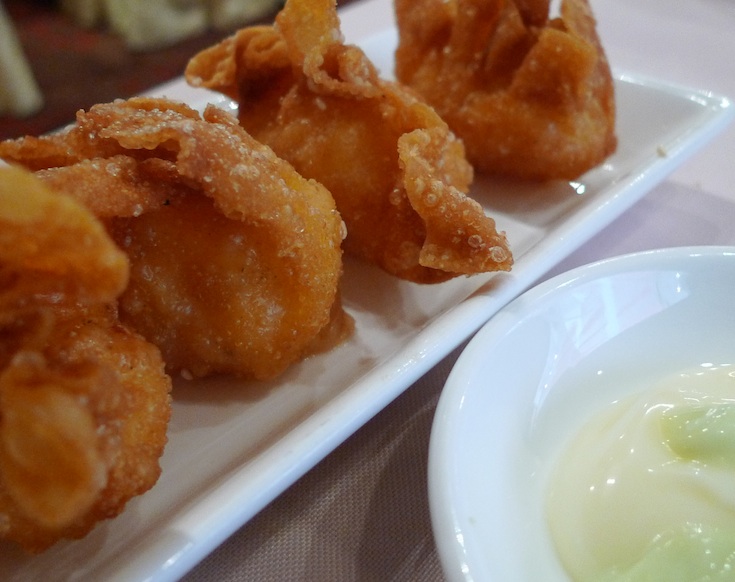
Deep Fried Prawn Dumpling - I am not exactly sure what this one is called even though it is one of the common dim sums and one fo my favourites. J called it fried 'har kau'. Whatever it's called, it's good. Crunchy, crispy (wonton?) skins stuffed with lovely tasty fat prawns, dipped in mayo (I didn't care for the greenish wasabi mayo). MMM!


Seaweed Prawn Rolls - Again, fat rolls of prawns. Can't go wrong with that if you're trying to please me! This was the first time that I had the immense satisfaction of biting into a big springy, tasty, crunchy ball of prawns. You know they say you can't miss what you've never had? Well now I've had it and I want more! This is going to be an expensive addiction if I have to buy a plane ticket every time I need to feed it.


Egg Tart - And to think S was going to leave without tasting this. Just look at the layers of flaky pastry and the golden yellow, smooth egg custard. On our second visit, we managed to get a table right in front of the entrance to the kitchen and so got first dibs on these as they came out, freshly baked and still lovely and warm. We got there at about 10 am that day and had eaten most of what we wanted in an hour. We were both quite full and were going to go to Tetsuya's that night, so it was supposed to be a 'light' lunch. Then I remembered that we had forgotten to get egg tarts the day before. I knew S would want some as soon as she saw them but she thought that she was too full to have anything else. The waitress said that the egg tarts wouldn't be ready until 11:30 am so I figured that if I stalled for a while longer, we could get the egg tarts and S would feel like eating them by then. Luckily, that was exactly what happened and S absolutely loved them. They're like beautiful, rich, sweet, buttery little bites of melt-in-your-mouth sunshine. 


Lou Mai Fan (Steamed Glutinous Rice) - Incredibly tasty and perfectly cooked. Normally glutinous rice is very sticky, soft and smooshed together but as you can see, the individual grains of rice are clearly... individual, and firm. It was seasoned well and had nice chunky bits of prawn, chinese sausage and egg.  


Green Beans Stir Fried with Garlic and Dried Shrimp - One of my favourite vegetable dishes. Simple, tasty, homey and satisfying.


Char Siu Pau (Barbecue Pork Bun) - As described in the first photo. You'll notice that unlike the artificial red colouring commonly found in its mass made cousins, the barbecue pork filling in this bun is a naturally dark caramel colour.

Special thanks to J and L for being great city hosts while we were in Sydney and for recommending Zilver.

Zilver
477 Pitt Street 
Haymarket 
NSW 2000 
Australia

Monday, April 4, 2011

'Claypot' Chicken Rice v2.0


Very sorry about not posting in the last few weeks. The internet at my place STILL hasn't been restored and it is getting quite inconvenient. I am in internet and 'flogging' (food blogging) withdrawal, so I am posting this even though it's not going to be a very long one. 

I've written about making 'Claypot' Chicken Rice once before, but the photo in that post was awful and the recipe was basic. I've taken it up a notch here and the little extras are definitely worth it. This is one of those really easy recipes that will produce a delicious, comforting, and incredibly satisfying, one-pot meal. Great for all you hungry, non-cooks like me.

Random notes: -

I use thigh fillets because: 
1. they contain more fat than breast fillets and are therefore far less fibrous and more moist. 
2. the fat flavours the rice well, and 
3. I am too lazy to deal with chicken pieces even though they would retain more flavour and moisture with the skin on and bone in, AND the fat from the skin would give the dish extra flavour (maybe one day, when I have my dream kitchen - I know, I know, what does a 'non-cook' want with a dream kitchen? Doesn't matter, I still do!). 


Claypot Chicken Rice 

Ingredients 
Rice 
Chicken 
Chinese Sausage (Lap Cheong) 
Ginger
Garlic 
Dark Soy Sauce 
Shallot 
Salted Fish 
Spring Onion 

Method 
1. Steam chinese sausages (as per instructions on packet), then slice (about half a cm thick) and saute in a dry pan until slightly browned and oil is released into pan. 
2. Set aside chinese sausage slices and using the same pan, heat cooking oil (estimate what you would need to coat all the rice you are going to use and add an extra tablespoon) and saute a large (about 2-3 inches) piece of ginger until slightly golden. 
3. Add uncooked rice, saute until translucent, then set aside (with ginger) in rice cooker pot. 
4. Heat some oil and saute garlic cloves (crushed with the side of a knife, but otherwise in one piece) until fragrant. 
5. Add chicken pieces and fry until golden brown. 
6. Add dark soy sauce and sugar to taste and stir fry well. 
7. Add water to the chicken (estimate the amount you would need to cook the rice in a rice cooker, if unsure, use less and add more later). 
8. Taste - sauce/broth should be just a bit too salty because the flavours will mellow considerably when cooked with the rice. 
9. Pour chicken and sauce/broth over the rice in the rice cooker pot and throw in the chinese sausage slices. 
10. Cook in rice cooker as you would cook plain rice. The switch will 'trip' and show that it is done before it actually is but leave it in to continue cooking. Just keep testing the rice to see if it needs more water or if it just needs to be left in longer. 
11. While it is cooking, finely slice shallots and chop spring onions. 
12. Fry sliced shallots until golden brown. 
13. Serve topped with the fried shallots, chopped spring onions and some salted fish.

Monday, February 21, 2011

Yee Sang (Homemade)

Every time I don't get to go back home for Chinese New Year, one of the first things I whine about is that I won't be able to have Yee Sang (a special salad that is normally only available during Chinese New Year in Malaysia and Singapore). It just did not occur to me to make our own - maybe because nowadays you'd only get the kind with the dehydrated vegetables at restaurants and supermarkets. Stupidly, for longer than I care to admit, the thought "how are we going to dehydrate the ingredients?" was the one thing that was floating about at the back of my head that was preventing me from coming to the now blindingly apparent solution. The haze must have lifted at some point because randomly, I put two and two together: the memory of my parents telling me that when Yee Sang was first introduced in KL, all the ingredients were fresh + that means we don't have to have dehydrated ingredients for Yee Sang = we can make our own Yee Sang with fresh ingredients. Doh!

So we made it by roughly following this recipe and it turned out brilliantly. S and I were both amazed and how closely it resembled what we normally get back home. One would think that there would be a drastic difference in taste when replacing dehydrated ingredients with fresh ones - but there really wasn't. I think the key ingredients were the toasted sesame seeds, the plum sauce and lemon juice. The first time we made it, we left out the lemon juice and the sauce wasn't quite right. The second time, with lemon juice, it was perfect. This tasty dish delivers a delightful myriad of flavours and textures - juicy, sweet, sour, savoury, crunchy, soft, crispy, nutty, soft, tangy, fresh....MMMMM! Every bite is just irresistibly refreshing, like a burst of 'happy' in your mouth. I don't think we will be able to resist not making this again even though it's not Chinese New Year anymore. S?

We adapted the recipe slightly because we couldn't get things like pomelo here, and as usual, we added/omitted whatever felt right:

Second attempt - close to perfect

Yee Sang (adapted from here)

Ingredients
(adjust to your preference)

Fresh salmon, sliced into thin fillets (season with lemon juice, a pinch of five spice powder and pepper)
Carrots, finely julienned
White radish/daikon, finely julienned
Pomelo, separated down to individual sacs or small segments (if you can get pomelo)
Pickled ginger, finely sliced
Pickled onions, finely sliced
Mango, julienned
Roasted peanuts
Toasted sesame seeds
Fried wonton skins
Fresh coriander

For the dressing :
Plum sauce mixed with lemon juice (about 2: 1, should still be reasonably thick)
Oil (we used canola)

Method

1. Make sure you buy the freshest fish for the dish and slice the fillet into thin strips. Season as instructed.
2. Arrange all the ingredients into sections on a large serving platter.
3. To serve, pour plum sauce dressing and oil over the salad then immediately toss the salad with chopsticks (and friends preferably) as high as you can (the higher the luckier apparently) without too much of it ending up on the table/floor, while making loud proclamations of good luck and fortune for everyone for the New Year.

Sunday, February 13, 2011

Din Tai Fung


Originally from Taiwan, Din Tai Fung has branches all over the world and is immensely popular in KL and Singapore. It is one of my favourite, nicer, Chinese restaurants particularly when I feel like going to a comfortable, pleasant, modern place for a delicious, quick, simple, reasonably priced meal. Like Fong Lye, Din Tai Fung restaurants are well presented and look like they would be quite expensive to dine at, but are not. If I remember correctly, the average individual meal was priced at about S$10 or under RM20.


The two things that I always order at Din Tai Fung are the Xiao Long Bao (Steamed Pork Dumplings) and the Fried Rice with Pork Chop. If you've never had Xiao Long Bao before, you're in for a real treat. These dumplings are special because they are made to hold broth inside the dumplings. The explosion of flavour from the broth from the first time I bit into one of these delightful, delicious, juicy, succulent little packages, was unforgettable. These dumplings are normally dipped in (or topped with) a bit fresh ginger and vinegar, which contributes that bit of acidity to the full flavoured dumplings and sets off the party in your mouth. It was quite a task, trying to photograph an open dumpling to show you the broth within, while desperately inhibiting the natural urge to slurp it all up in one mouthful.


Besides the Xiao Long Bao, of course, the Fried Rice with Pork Chop is another one of their extremely popular dishes. I know you can get fried rice just about anywhere, but like my sweet and sour pork complaint, it's one of those things that is taken for granted because it's so common and easy to make that no one really makes an effort to perfect it - until Din Tai Fung. In my opinion, their simple, classic, unadulterated Fried Rice is close to perfection. Their famous Pork Chop, which you can also order on its own, is always seasoned and cooked perfectly, beautifully tender and very, very tasty. There's no special glaze or sauce to dress it up, and no need for it - the dish is exquisite in its simplicity.


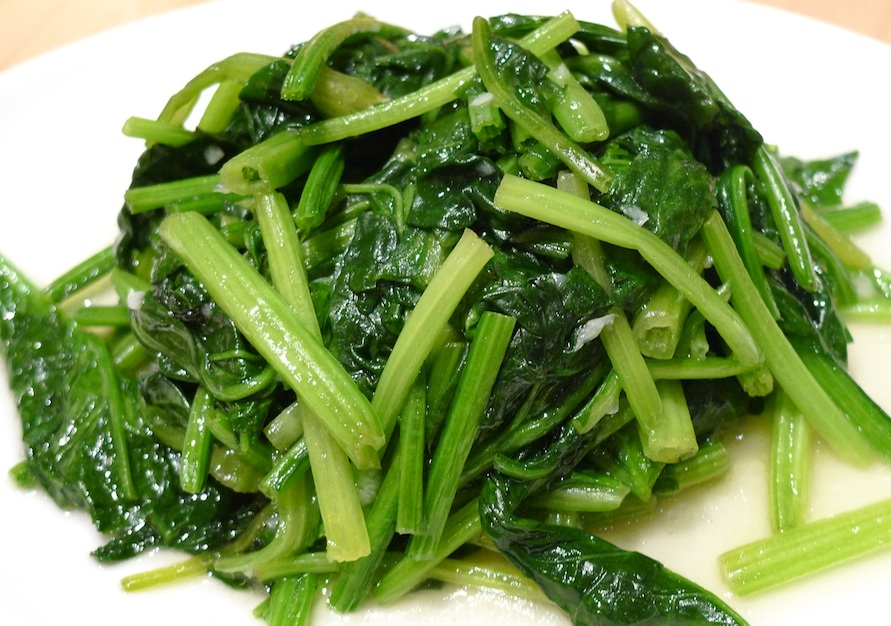
This visit, I also ordered some stir fried vegetables (might have been spinach), which was fresh and clean tasting - not overly seasoned or drenched in sauce. The sight of the bright, green young, tender shoots has reminded me of another pet peeve of mine - when restaurants serve vegetables 'old' vegetables, i.e. vegetables that were harvested later in the growth cycle. 'Old' vegetables are often tough and bitter, which is why back home, normally only young shoots are used for cooking. I think I've been served 'old' vegetables here (in Dunedin) more times in eight years than I have ever been in all the years back home. The point I am trying to make is that the vegetables at Din Tai Fung were young and tender and very good to eat.


Finally, I also had a dish of fried prawns with a mayonnaise-base dressing (might have been called 'Salad Honey Prawns' or something like that). I don't remember it being particularly spectacular, but I think it was decent enough. Something in the back of my mind tells me that I thought it was a bit sweet and that the flavour required some complexity and depth. Still I ate it all, so it can't have been bad.

Oh I want some Fried Rice with Pork Chop now. Writing about Chinese food during Chinese New Year when you're away from home is just masochistic.


Raffles City Branch 
252 North Bridge Road
#B1-08/09/10 Raffles City Shopping Centre 
Singapore 179103 

Mid Valley The Gardens Branch 
Lot LG-207, The Gardens Mid Valley City, 
Lingkaran Syed Putra 
Kuala Lumpur 59200 
Malaysia

LinkWithin

Related Posts with Thumbnails